
French Drains in Pinellas Park, Where Low, Flat Ground Has Never Drained on Its Own
The canals keep the city dry. We keep your yard dry.
Trufam Drainage builds French drains, yard drainage, and underground systems for Pinellas Park homes, from the Mainlands villas to the older blocks off Park Boulevard. Your lot sits on flat, sandy ground with the water table close to the surface, so heavy rain has nowhere to go on its own. We design a path that carries it off your property and keeps it there.
A City That Only Stays Dry on Purpose
Pinellas Park was settled in 1911 on low, wet marshland. To make the ground usable, the Pinellas Park Drainage District was formed in 1914 and dredges cut channels across the area, deepening Joe's Creek and Cross Bayou and hauling out soil by the foot. The town has stayed livable ever since because a network of canals and ditches carries its water away. Today the Pinellas Park Water Management District keeps those main channels flowing.
Here is the part most homeowners miss: living near a canal or ditch does not mean your yard drains.
The district maintains the big channels. The water between your house and that channel, across your own low spots and against your foundation, is the city's job and yours. A ditch running behind your lot can be full and flowing while your backyard still holds water for days, because nothing connects the two.
That connection is the whole job. We find where the water collects, build a French drain or collection line to catch it, and carry it at a real downhill slope to a working outlet, so your yard drains instead of waiting on the ground to dry out.
- 1The district keeps the main canal and rear ditch clear.
- 2Your low spot fills and holds water long after the rain.
- 3A French drain catches the water at the source.
- 4A sloped line ties it into a real outlet, so it leaves.
Flat Lots, Sandy Soil, and a Water Table a Foot Down
Pinellas Park sits about 13 feet above sea level, and most lots have almost no slope to drain toward. Under the grass is poorly draining flatwoods sand that hits a hard clay-like layer a foot or two down, and in the summer the water table climbs to within 6 to 18 inches of the surface. When a storm drops a few inches in an afternoon, the ground is already full and the water has nowhere to soak. It stands in the yard, creeps toward the slab, and turns the turf to sponge.
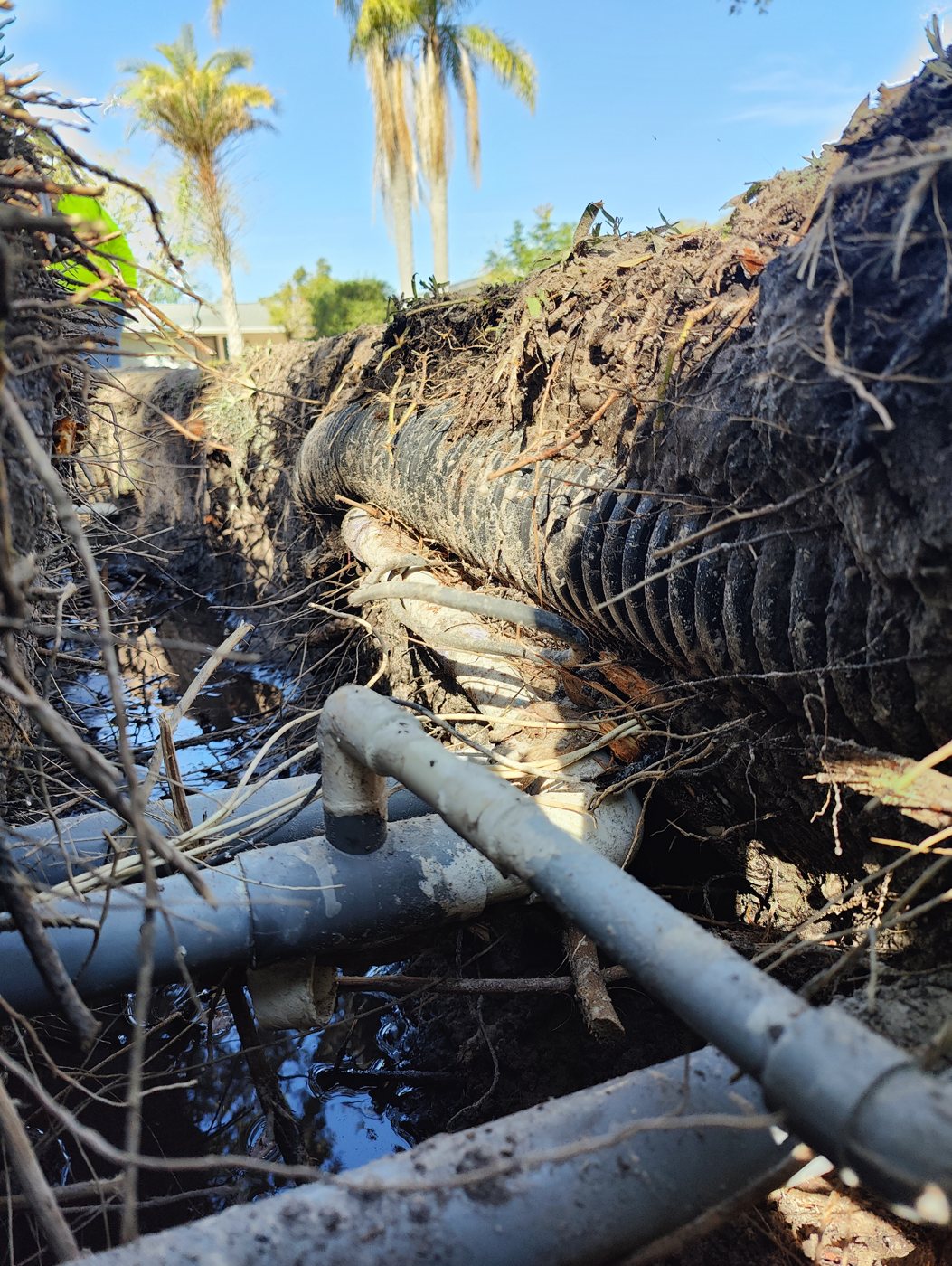
Older Pinellas Park homes, many built in the postwar 1950s and 60s, often have no real drainage at all, or a thin corrugated pipe that has crushed, clogged, or filled with roots. On a flat lot, add a lanai, a pool, or a wider driveway over the years and the grade quietly changes, sending runoff toward the lowest corner, which is usually the house. We see the same handful of signs again and again.
- Water stands in the yard for days after a normal storm
- Soggy turf near the slab, the lanai, or the pool cage
- Downspouts dumping straight down at the foundation
- A ditch behind the lot that runs while your yard still floods
- 1On saturated ground with no slope, water has nowhere to go and stands.
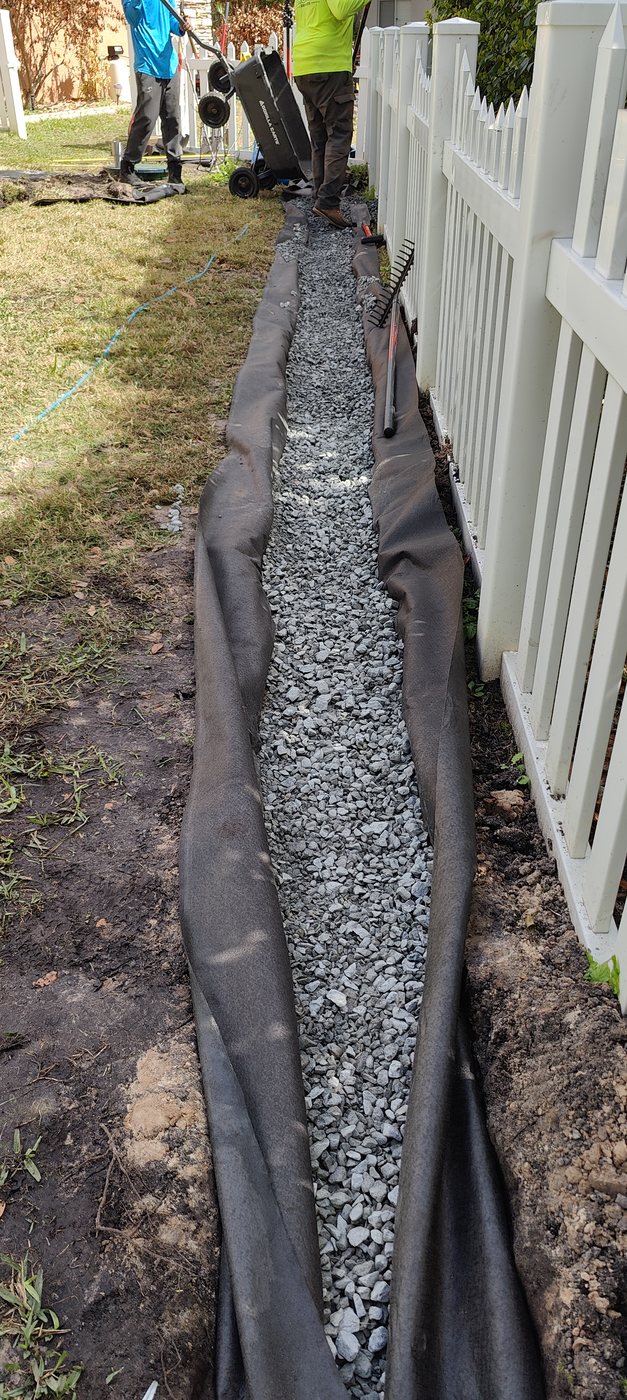
- 2A French drain, perforated pipe in clean granite wrapped in fabric, catches it below grade.
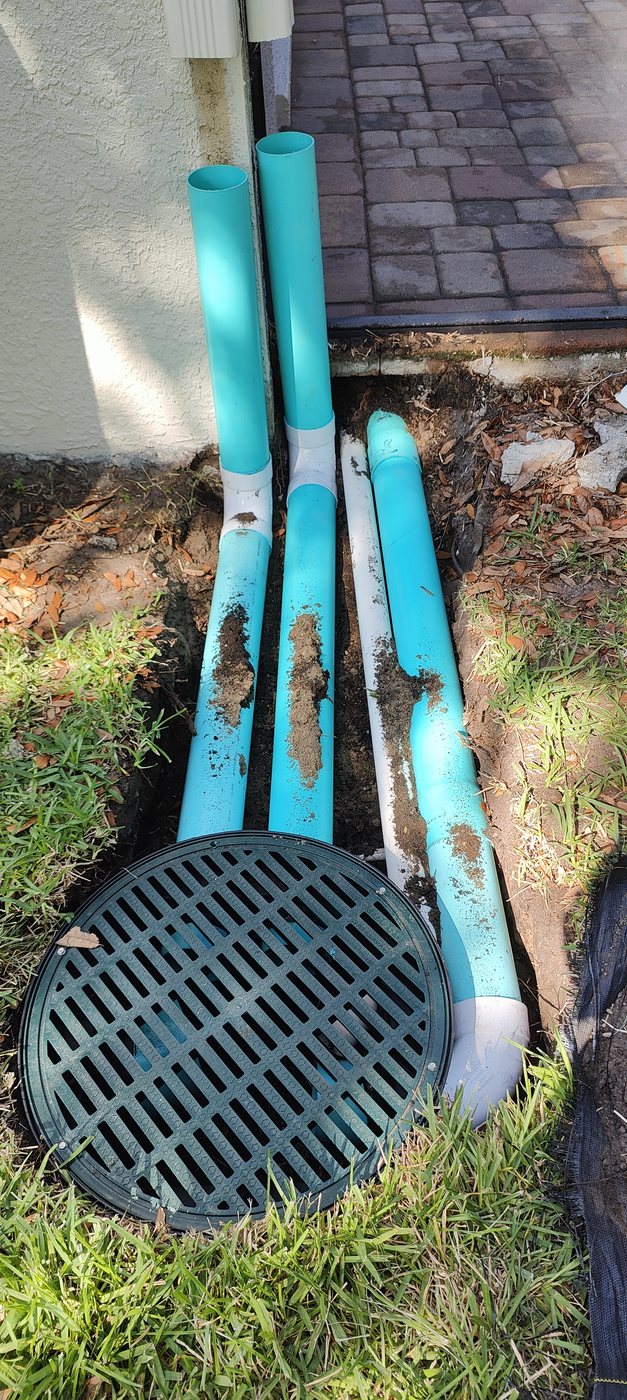
- 3Solid SDR-35 pipe carries it away at a real downhill slope, no bellies.
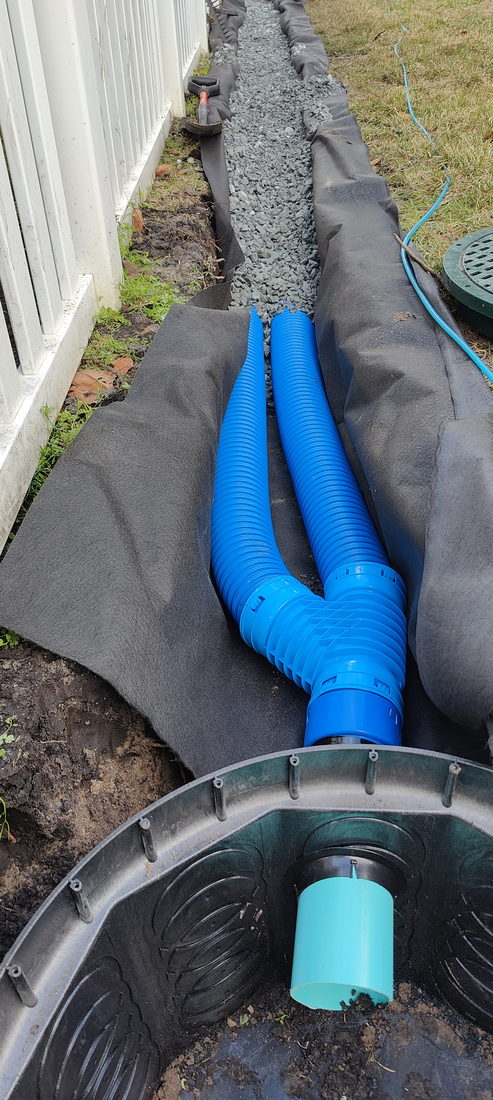
- 4It leaves at a working outlet, a high-flow basin, daylight, or an approved tie-in.
The Pinellas Park Yards We Get Called To
Different corners of the city, the same water sitting where it should not. Here is how we solve the ones we see most, and where each one leads on our site.
The mid-century block ranch
A 1960s home off Park Boulevard or 49th Street, flat lot, no fall, and a backyard that turns to sponge every wet season. We build a French drain across the low ground and grade the yard to move water to a real outlet.
Best fix: French drains and yard drainageThe Mainlands villa
A single-story slab home in a 55-plus community, downspouts pouring right at the foundation and low common ground next door. We pull the downspouts off the wall and tie them into a proper underground drainage system.
Best fix: underground drainage and foundation drainsThe lanai or pool that changed the grade
A newer addition quietly rerouted the water, and now the deck and patio pool every storm. We set channel drains at the hard surfaces and carry the runoff away underground.
Best fix: channel drains and yard drainageThe lot backing a district ditch
The canal behind the fence runs fine, but the yard still floods, because nothing connects the two. We collect the low spot and build the sloped line that ties it into a working outlet the right way.
Best fix: yard drainage and a proper underground lineThe low block that cannot drain by gravity
Some Pinellas Park lots sit too low to send water anywhere on their own. When gravity is not enough, we build a heavy-duty sump system sized to move the volume during a storm.
Best fix: a custom sump systemGutters feeding the problem
Undersized or missing gutters dump the whole roof at the base of the wall. We install seamless gutters and guards, then route the downspouts into the drainage system so the roof water leaves too.
Best fix: seamless gutters and gutter guardsHow We Build a Drainage System
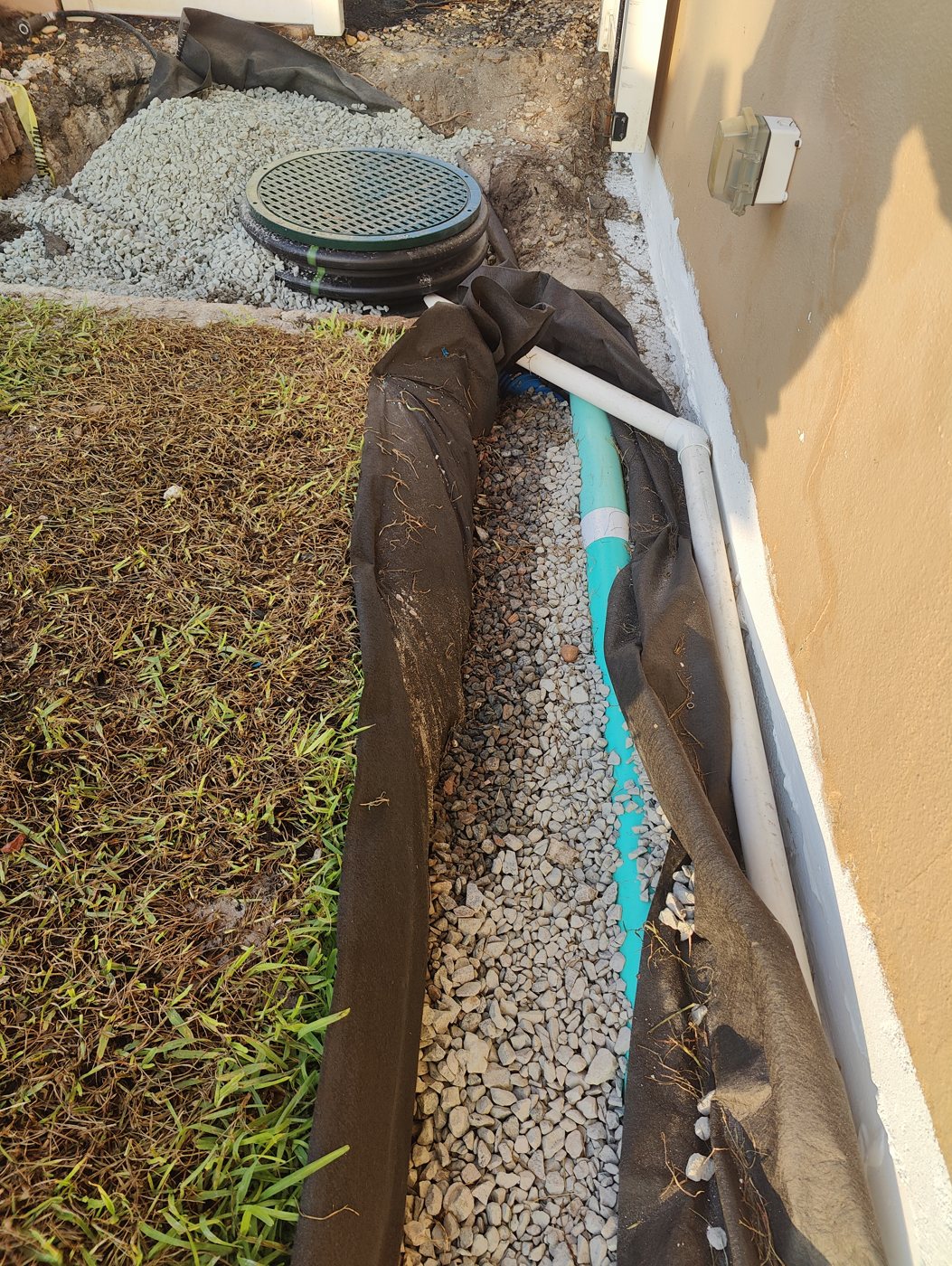
Every photo on this site is a real Trufam install, never stock and never a rendering. These are comparable Tampa Bay jobs, built the same way we would build yours.
Built for Pinellas Park, Priced to Last
We are not the cheapest drainage company in Pinellas County, and that is on purpose.
Most homeowners who call us are done paying for the quick fix that failed. We use solid SDR-35 pipe instead of thin corrugated line, clean #57 granite instead of cheap limestone that breaks down, and real DOT-grade drainage fabric rated for decades in the ground. Every system is designed around your lot, set to the proper slope, and built with access points so it can be cleaned and serviced for years. You are paying to protect a much larger investment, your home, and we price it that way.
A downspout tie-in or a single low spot sits at the low end. A full-yard system with several collection points and a long run to a working outlet is a larger investment. We give you a real number after we walk the property, never over the phone.
Serving Pinellas Park and the Surrounding Area
We build drainage across Pinellas Park, from the Mainlands and the Gateway area to the older neighborhoods near Freedom Lake Park and England Brothers Park, and out along 49th Street, US 19, and Park Boulevard. We work throughout Pinellas County and the wider Greater Tampa Bay area, on the same flat lots, sandy soil, and high water table every day.
Not in Pinellas Park, or want to see the full footprint? Start with the Pinellas County page, or browse every city we serve.
Trusted by Tampa Bay Homeowners
Live 5-star reviews from Google, updated automaticallyCommon Questions About Drainage in Pinellas Park
★★★★★ Rated 4.7 by 38 homeowners on Google
Get the Water Off Your Pinellas Park Property
Tell us where the water sits. We will walk the property, find where it comes from and where it needs to go, and design a system built to last.