
50in
Rain a year
About fifty inches falls on the county annually, most of it in hard summer storms that arrive back to back.
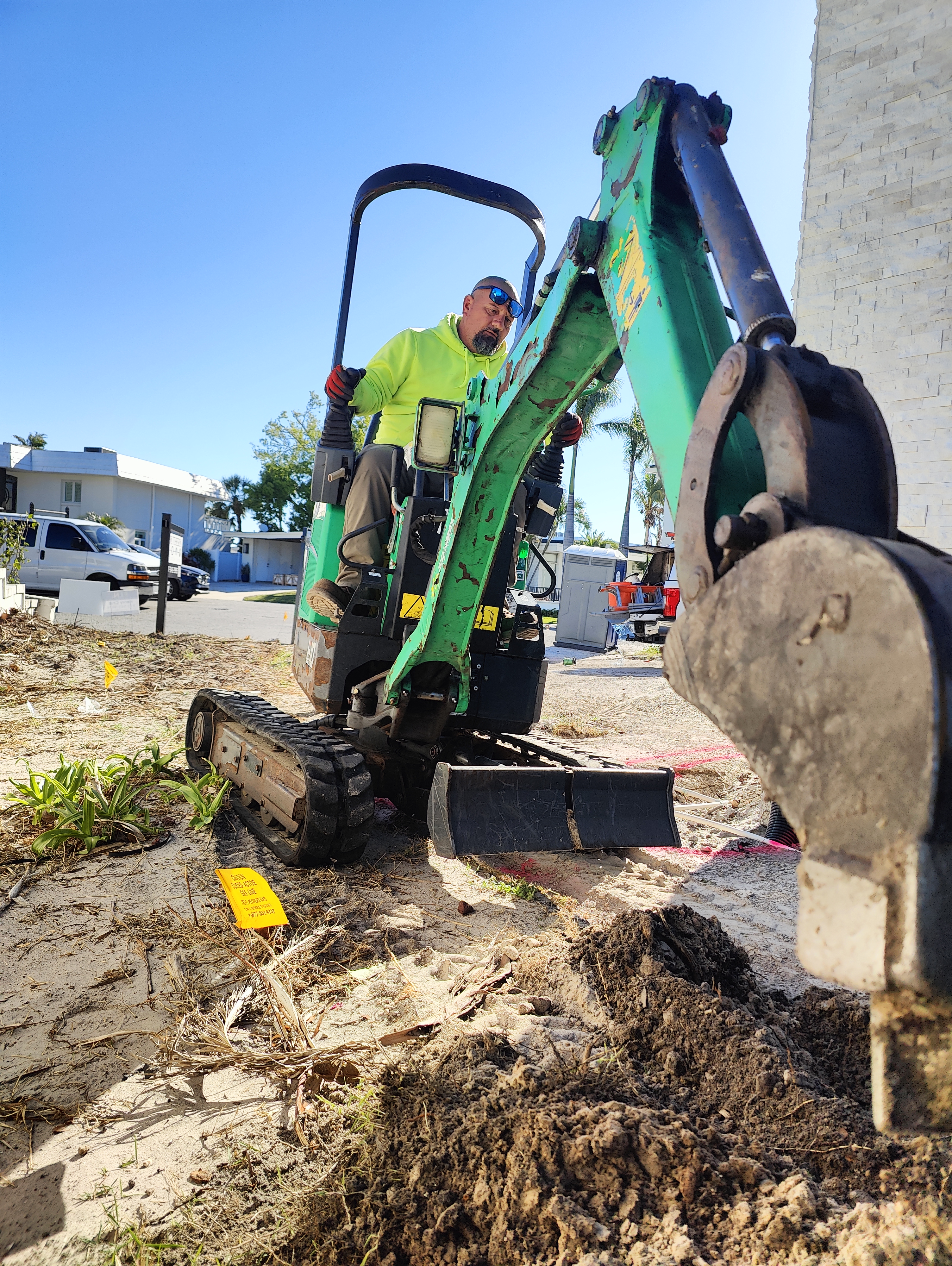
The ground here does not drain on its own. We give the water somewhere to go.
From the clay-heavy ground east of Tampa to the flat, low peninsula of South Tampa to the new subdivisions rising on packed fill down south, Hillsborough holds water in three very different ways. Trufam Drainage designs and builds the systems that move it out, in every corner of the county.
About fifty inches falls on the county annually, most of it in hard summer storms that arrive back to back.
Land that sits close to the water table, so rain has very little room to soak away before it pools.
More homes, more roofs, more packed fill, and more water with nowhere natural left to go.
From Tampa and Brandon to Riverview, Apollo Beach, and Ruskin, with the same materials and standard everywhere.
Hillsborough is not one kind of ground. The eastern half sits on tight clay left over from phosphate country. South Tampa is a low peninsula pinned between two arms of the bay, with the water table close under the grass. And the fast-growing south went up on machine-packed fill over old farm flats. A system that works in one of these does not automatically work in another, which is why we start every job by reading the ground in front of us.
East of Tampa the land carries phosphatic clay and a tight subsoil, a leftover of the region's old phosphate country. Rain drops through the sandy topsoil fast, hits the clay, and stops. Yards stay soupy for days, and grading a new lot often turns up more clay than sand.
South Tampa and the Interbay peninsula sit flat and low, pinned between two arms of the bay with groundwater close under the grass. The city is spending heavily on peninsula stormwater projects and new holding ponds, but none of that public work drains a private yard. The lot is still the homeowner's job.
The booming south went up quickly on machine-compacted fill over former tomato and strawberry flats. Builder grading sheds water off the slab and passes inspection, then sod laid over hardpan and thin corrugated pipe give out within a few years. A solid, serviceable system is a different animal.
Pick your area for the water story where you live, the neighborhoods we serve, and the systems that fit your ground.
The peninsula and the older urban core, flat lots and a high water table.
Brandon →An established east-county suburb where aging yards sit on compacted fill.
Riverview →Booming along the Alafia River, new builds on graded, packed ground.
Apollo Beach →Canal-front and waterset living right at bay level, with little fall to work with.
Ruskin →Low, flat farm flats about five feet above the bay south of the peninsula.
Valrico →Rolling east-county ground sitting over a tight clay subsoil that traps rain.
Fish Hawk →Master-planned neighborhoods on clay, where runoff collects between homes.
Thonotosassa →Lakeside and rural northeast, sand over hardpan that will not drain down.
We walk the property first, find where the water starts and stalls, and where it can legally go. Then we build only what your lot actually needs, with the same materials from Tampa to Ruskin.
Perforated pipe wrapped in DOT-grade fabric and clean #57 granite, custom-built for the water your soil traps. The fix for grass that stays soaked over clay or hardpan.
Solid SDR-35 pipe carries roof and surface water from every downspout and basin to a real discharge, well away from the slab, with serviceable cleanouts at the connections.
Catch basins, channel drains, and collection built for flat lots and dead swales. Designed around fences, pool cages, and the way your lot actually sheds water.
A perimeter drain at the footing plus a rubberized wall membrane, built for the slab and stem-wall homes on the county's high-water-table ground.
6-inch and 7-inch K-style gutters sized for Florida rain and tied into the underground system, so the roof stops feeding the puddle.
High-pressure cleaning for underground lines, channel and pool drains, basins, and outlets. Solid PVC jets safely and drains like new again.
Summer storms stall over the bay and drop several inches in an afternoon, and the county is pouring millions into flood projects that will never drain a private yard. The yard is the homeowner's job, and it is what we build for, with materials chosen for decades in wet ground and no shortcuts, whether the ground is clay, fill, or coastal sand.
Commercial-grade PVC in 20-foot sections. Fewer joints, no crushing, nothing for roots to find.
Hard stone that keeps draining. We skip limestone, which breaks down in the ground.
Real drainage fabric rated for about 50 years in the ground. Weed barrier lasts a couple.
Sediment basins and cleanouts at the connections, so the system can be maintained without digging.
Systems pitched to drain dry between storms. Pumps only where the land truly gives no fall.
Most Hillsborough homeowners who call us have already paid once for a fix that did not last. A Trufam system is designed, priced, and built to be the last one the yard needs.
Three frames from real Trufam jobs across Tampa Bay.
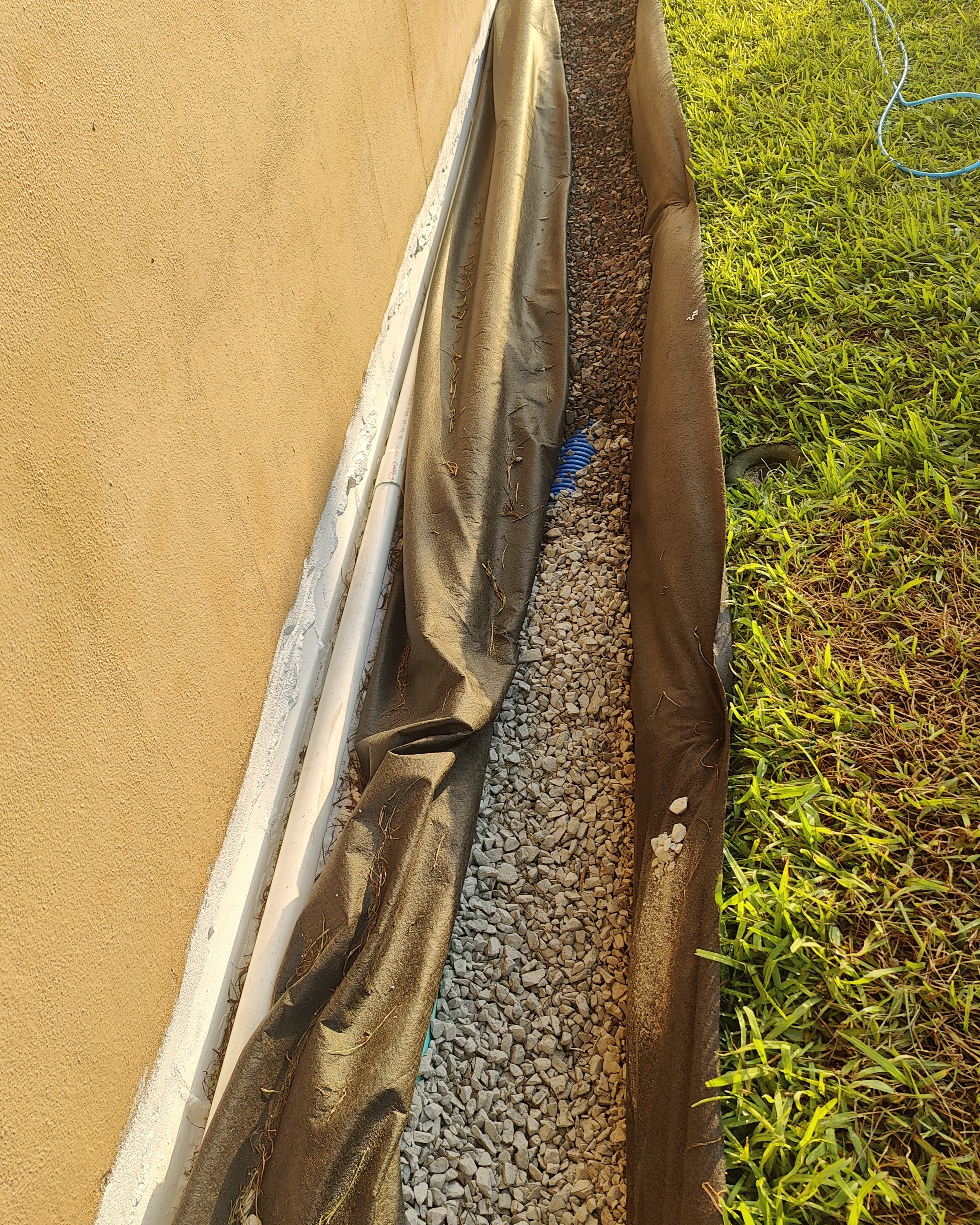
A French drain going in, perforated pipe bedded in clean #57 granite and DOT-grade fabric.
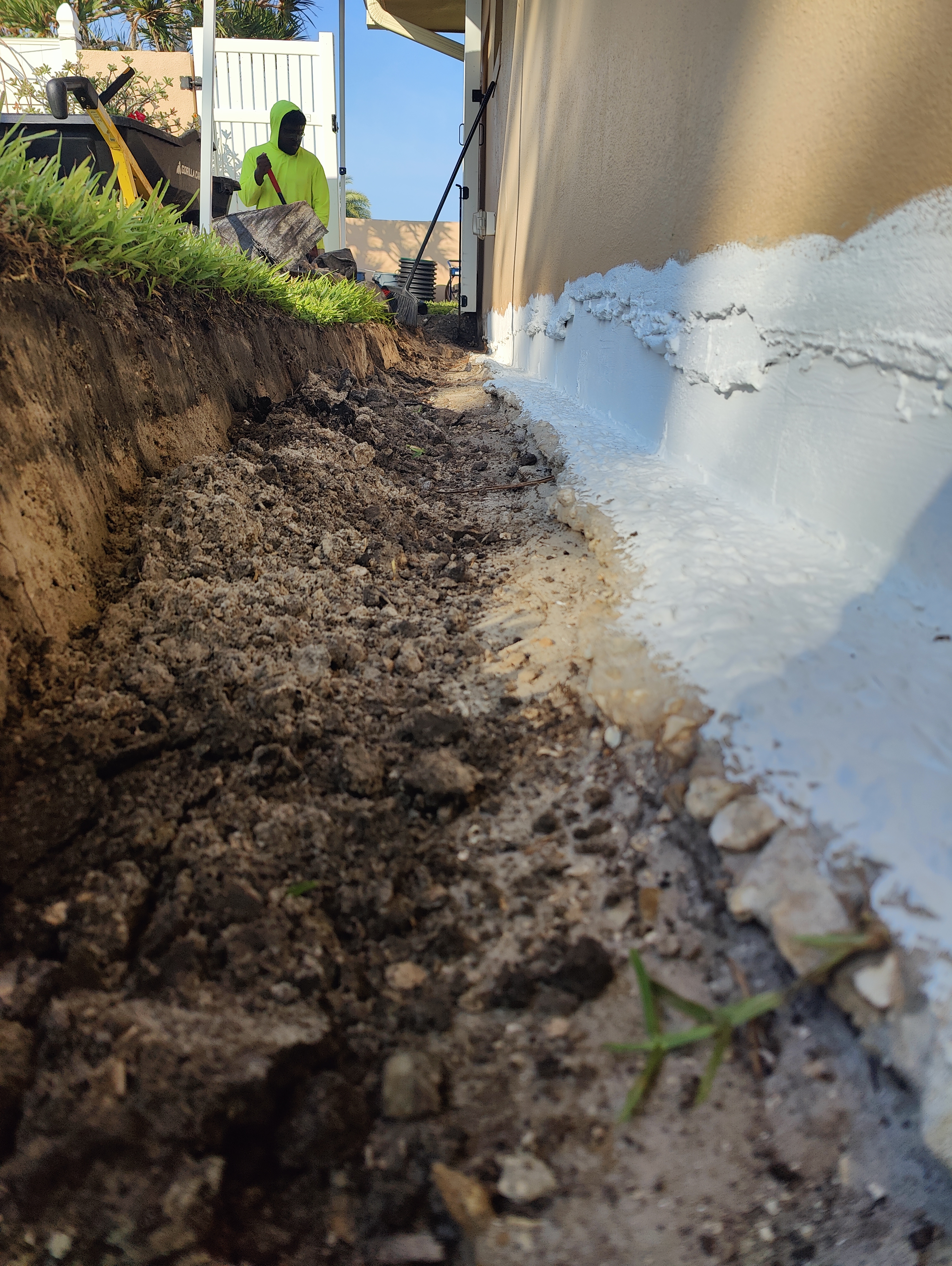
A foundation wall sealed with a rubberized coating, ready for the foundation drain that keeps water off it.
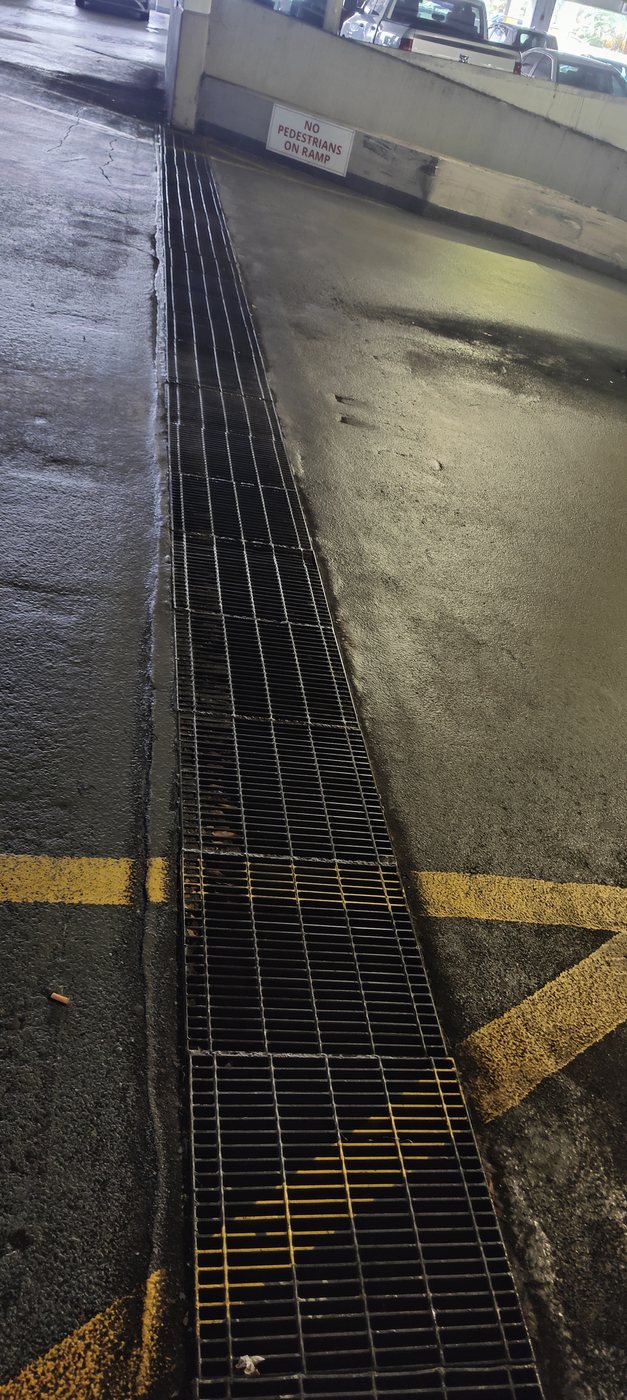
Clearing a commercial trench drain. We handle drainage cleaning countywide.
Yes. We work inside the City of Tampa and across unincorporated Hillsborough, which is where most of the county lives, including Brandon, Riverview, Valrico, Apollo Beach, and Ruskin. The materials and the standard are the same everywhere.
The eastern county sits on phosphatic clay and a tight subsoil. Rain soaks through the sandy top foot quickly, hits the clay, and stops, so the water spreads sideways instead of draining down. A French drain built for the way your ground actually layers pulls that trapped water out of the grass and carries it to a real outlet. Guesswork drains skip the clay and fail. Ours start with it.
The Interbay peninsula is low and flat, pinned between two arms of the bay, with the water table sitting close under the surface. There is very little fall to work with and little dry ground to absorb a storm. The city is investing in large peninsula stormwater systems and holding ponds, but those handle streets and regional runoff, not your lot. Moving your own water still takes a yard drainage or underground drainage system built for the property.
Builder grading is designed to shed storm water off the pad and into the swales, and it usually passes inspection on day one. It was never designed to dry out compacted fill, protect the AC side yard, or survive fences, sheds, and pool cages going in. Where builders pipe downspouts at all, it is usually thin corrugated plastic we dig up packed with roots and sand a few years later. Solid pipe and a real outlet are a different animal.
Flood maps and flood insurance deal with storm surge and rivers rising. Water standing in the grass after an ordinary storm is a drainage problem, and drainage problems are fixable. A yard drainage system moves the everyday water out, which also means the ground is not already full when the big storms come.
The price follows the design: how much water, how far it has to travel, and what the discharge takes. We use commercial-grade materials and build systems meant to work for decades, so we are rarely the lowest bid. Most homeowners who call us have already paid for a cheap fix once. Every estimate starts with a walkthrough, and you see exactly what you are paying for in writing.
Thirty minutes on site tells us where the water starts, where it stalls, and where it can go. You get a straight answer and a system designed for your ground, in writing.
Nearby counties: Pinellas·Manatee·Sarasota·All Service Areas