Why Slope and Outlet Height Decide If Drainage Works
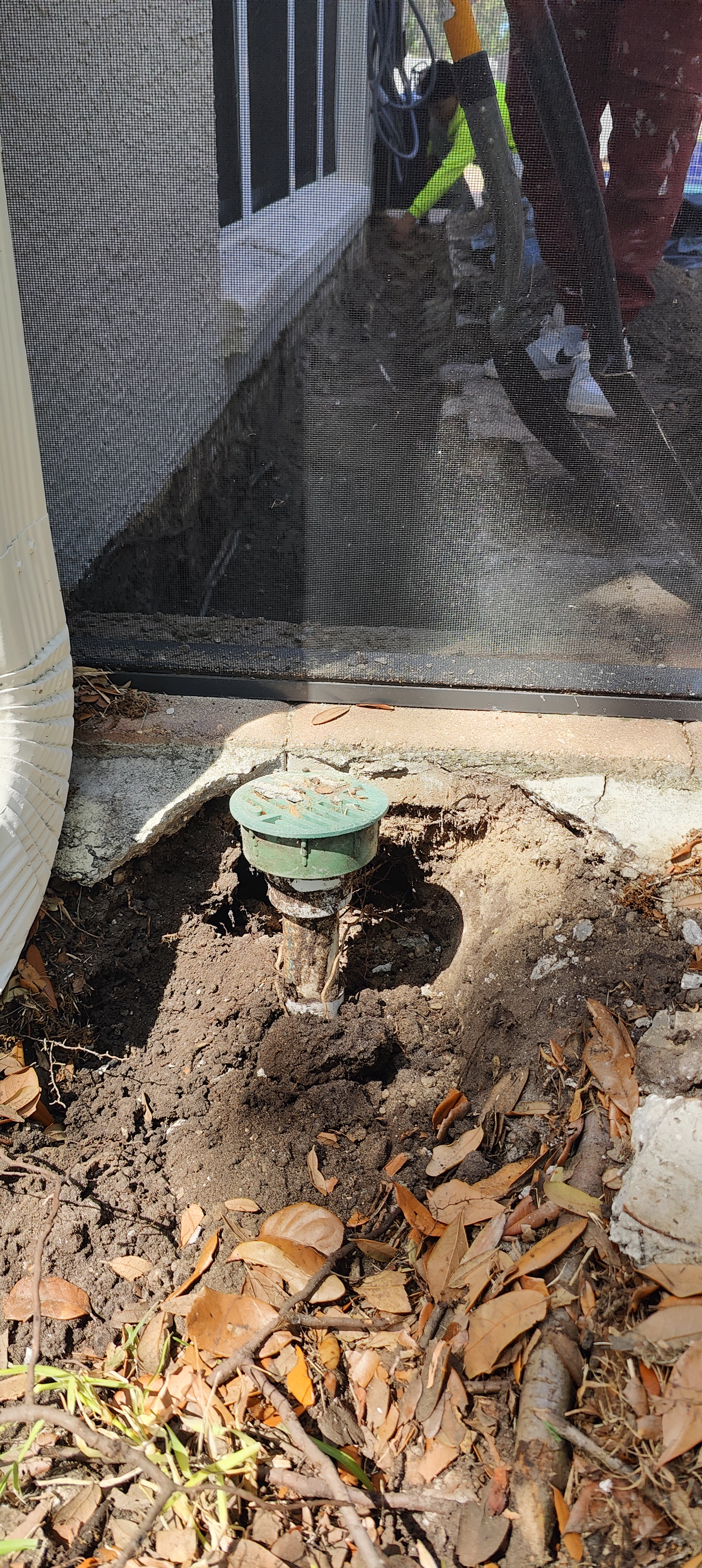
This is the exit point of a failed drainage system, and it breaks one of the most basic rules in drainage.
The outlet was set higher than the channel drain feeding it. Water cannot run uphill, so instead of leaving the system, it always backed up into the channel drain. To make it worse, the grate was a small four-inch piece that trapped every leaf and twig coming through.
Water has to go downhill to leave
It sounds obvious, but it gets missed constantly. Every part of a drainage system has to step downhill from the point where water enters to the point where it leaves. If the outlet sits higher than an inlet anywhere upstream, that inlet floods. The water has no path out.
That is exactly what happened here. The channel drain could never clear because the only exit was above it.
Slope and level are part of the design
We set grade with a level on every install, keep trench bottoms flat and consistent, and confirm the outlet sits lower than everything feeding it. We also size the grate and outlet so debris does not turn the exit into a strainer.
These are the quiet details that decide whether underground drainage works for a decade or fails the first wet season. A system is designed, not guessed.
Common Questions
Does a drainage system have to slope downhill?
Yes. Water cannot run uphill, so every part must step downhill from inlet to outlet. If the exit sits higher than an inlet upstream, that inlet floods.
Why does my drain back up even when it looks clean?
The outlet may be set higher than the drain feeding it, so water cannot leave. Trufam sets grade with a level so the exit always sits lower than everything feeding it.
Trufam Drainage. Schedule a Drainage Walkthrough if your drains back up no matter how clean they look.
