
Roots and Gravel: How Cheap Drainage Pipe Fails
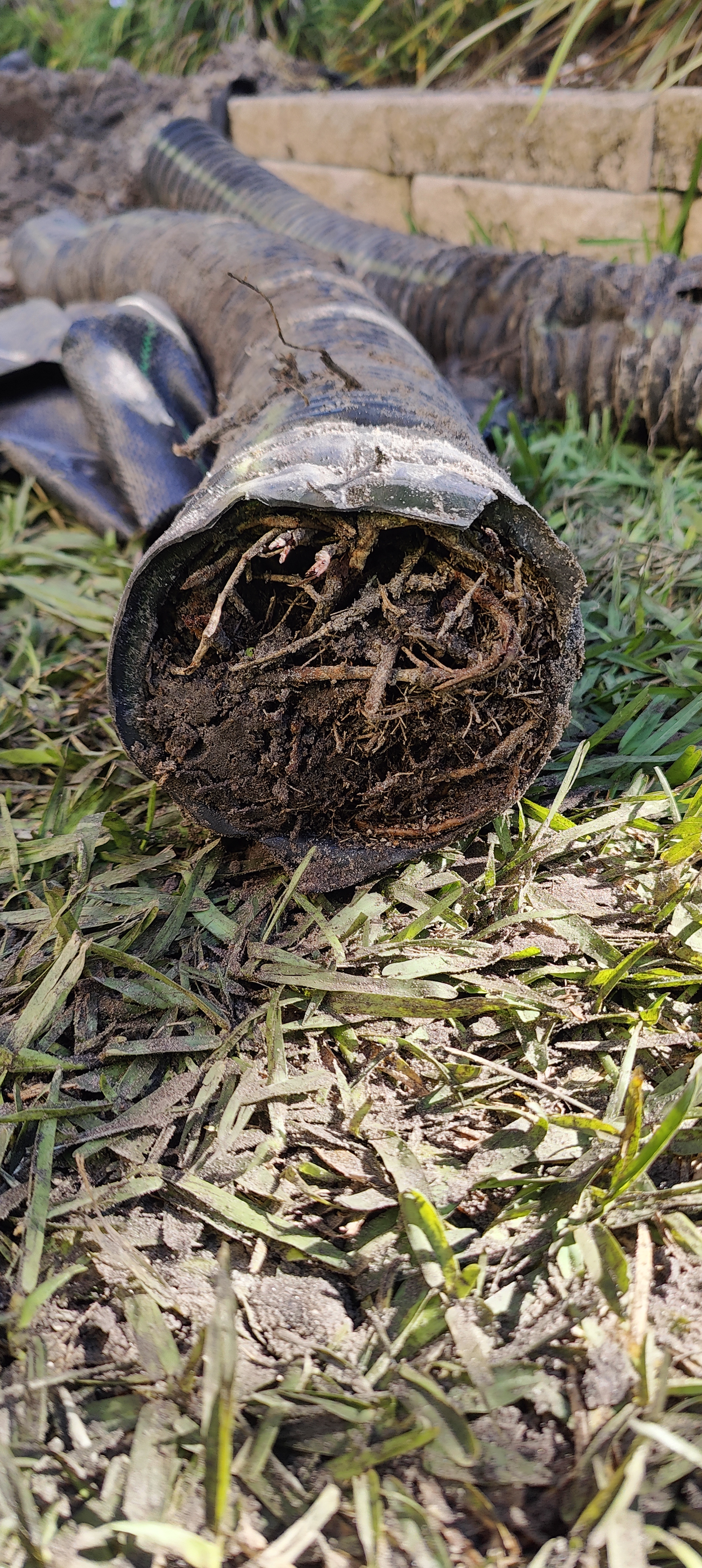
This is the inside of a failed corrugated drainage line, and it shows two different failures in one piece of pipe.
The wall is packed with shingle gravel that washed down from the roof. And tree roots have grown straight through the side of the pipe. Between the two, there is no flow path left at all.
Two ways corrugated pipe fails
Corrugated pipe fails for two reasons, and this line managed both.
First, the ribbed wall traps debris. Every ridge catches shingle grit and sand, and it never washes out. Over time the pipe packs solid.
Second, the thin, flexible material gives tree roots an easy target. Roots seek water, and a drainage line is the wettest spot around. The soft wall lets them punch right through and grow into the pipe, where they form a net that catches everything else.
Solid PVC fixes both
SDR-35 solid PVC solves both problems for a small difference in material cost. The smooth interior wall keeps debris from getting trapped, so water carries it through. The thicker, stronger wall keeps roots out for the life of the system.
People choose corrugated to save a little up front. This pipe is what that savings looks like a few years later.
We use solid PVC on every underground drainage line because the goal is a system you do not have to dig up again.
Common Questions
How do tree roots get into a drainage pipe?
Roots follow water, and a drainage line is the wettest target in the yard. Corrugated pipe’s thin wall lets them punch through and form a net that traps everything else.
Is corrugated pipe worth the savings?
Rarely. The small upfront savings turns into a packed, root-split line and a dig-up later. Solid SDR-35 PVC keeps debris moving and roots out.
Trufam Drainage. Request an Estimate.
