Closing a French Drain the Right Way
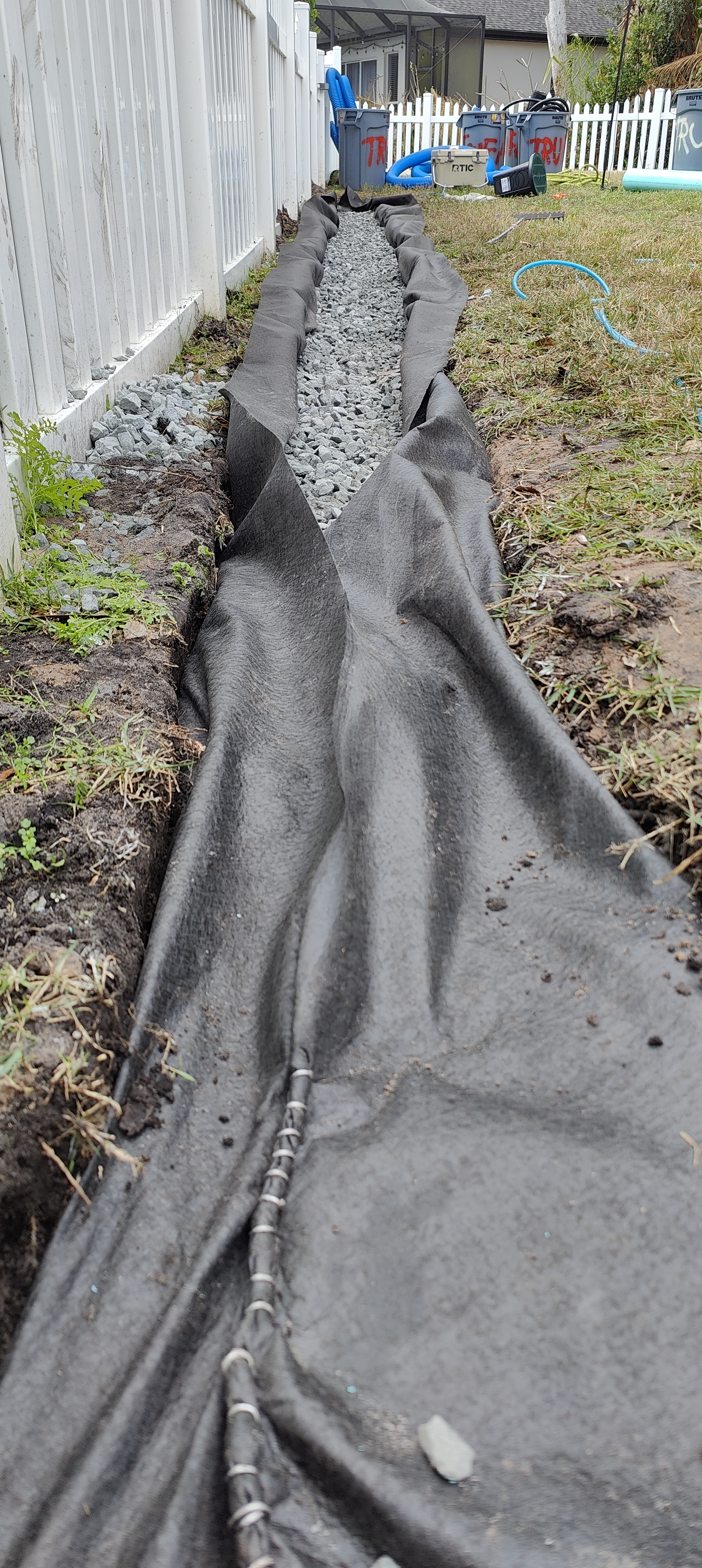
This is the same French drain project from earlier, further along in the build. The trench is being closed up, and the double-punch geotextile fabric is folded over the granite stone, the way it should be.
From this point the surface gets finished to match the rest of the yard. But the step happening right here is what decides whether the system lasts.
Why the fold matters
A French drain works because water can pass freely through the stone and into the pipe while soil stays out. The fabric is what keeps soil and roots from mixing into the rock. If the fabric is not folded fully over the top of the stone, dirt falls in from above, fills the gaps between the rock, and silts the system up. That can happen within a year or two.
So the closing step is not just tidying up. Folding the fabric completely over the granite seals the rock off from the soil above and protects the flow path for the long haul.
The details you cannot see later
Once the surface is finished, no one can tell whether this step was done right. That is exactly why it gets skipped on cheap installs. We do it right because we know what happens when it is not.
This is the standard on every French drain we build. No shortcuts on the parts that get buried.
Common Questions
Why is folding the fabric over a French drain important?
It seals the granite stone off from the soil above so dirt and roots cannot mix into the rock and silt the system. Skipped, it can clog within a year or two.
Can you tell if a French drain was built right after it is finished?
Not from the surface, which is exactly why corners get cut on the buried steps. Trufam folds the fabric fully and uses clean granite on every build.
Trufam Drainage. Request an Estimate.
